

Originally published in Korean by Dong-A Ilbo on September 8, 2026. English version was prepared by the author. This interview has been edited and condensed for clarity.

Artificial intelligence is stepping off the screen. For the past three years, the protagonist of AI has been the chatbot. People have grown used to watching AI write prose, generate code, and answer questions. Yet most of the world economy still runs in the physical world. Cars drive on roads, trucks haul freight, excavators dig, and tractors plow fields. Putting intelligence into these machines, what the industry calls “physical AI,” has emerged as the next battleground for AI.
When people hear “physical AI,” they usually picture humanoid robots. But the machines that will be given intelligence first, and at the largest scale, are the ones on wheels. Close to 100 million new cars are built worldwide every year, and tens of millions of trucks, construction and mining machines, and farm vehicles are at work in the field. A significant share of those machines is already being developed on the software of a single Silicon Valley company.
The rules of competition are different here, too. If a chatbot gives a wrong answer, you simply ask again. If a car traveling at 100 kilometers an hour or a mining truck weighing hundreds of tons makes the wrong call, there is no undoing it. As much as how smart the model is, what matters is putting that intelligence onto very different machines, integrating it with the surrounding systems, and validating it countless times so that it operates safely.
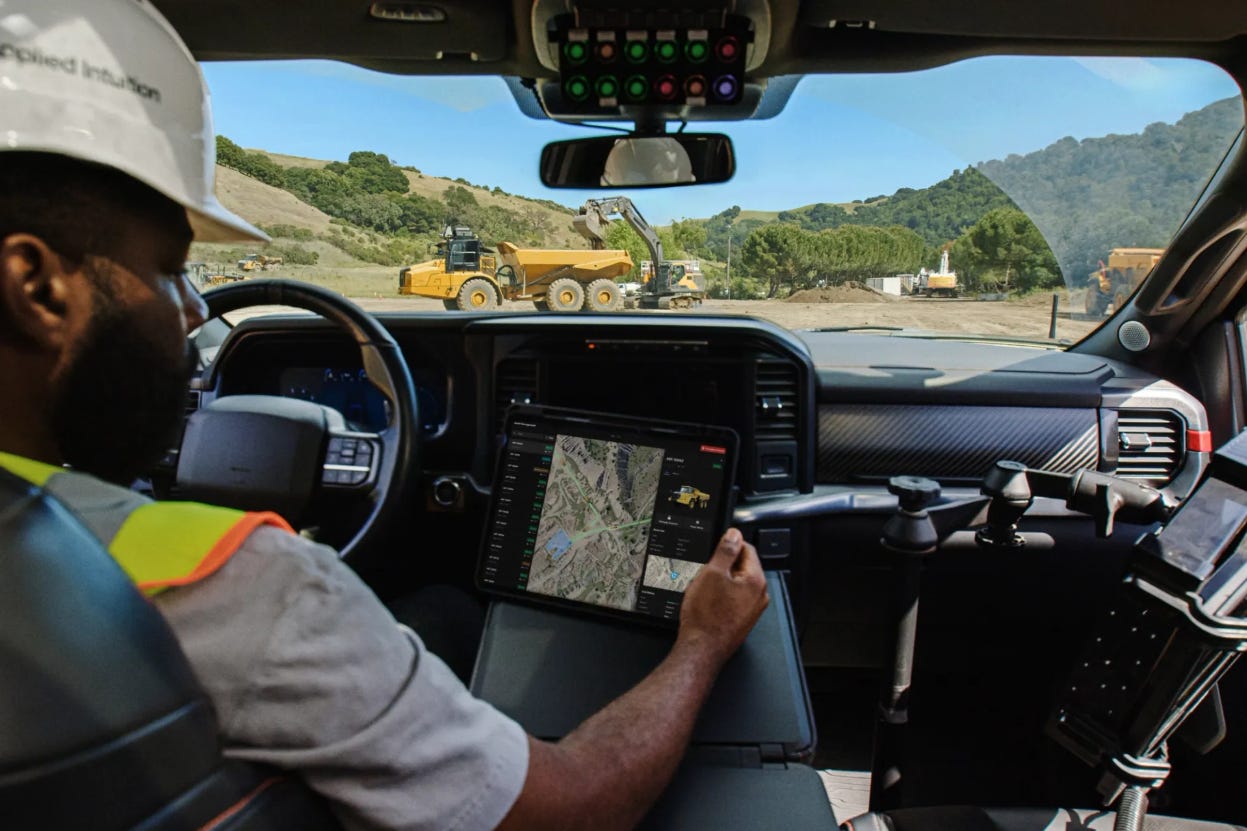
Applied Intuition, headquartered in Sunnyvale, in the heart of Silicon Valley, is the company that has dug into exactly this problem. Founded in 2017, it started out with simulation tools for testing autonomous driving systems in a virtual environment before they ever reach a real road. Today it spans three pillars, namely tools and infrastructure, a vehicle operating system (Vehicle OS), and autonomy software (the autonomy stack), and defines itself as a “physical AI company.” Eighteen of the world’s top 20 automakers are customers, and it supplies major programs for the U.S. military and its allies. Its business reaches beyond passenger cars and trucks into defense, construction, mining, and agriculture. The company describes its goal as “bringing intelligence to a billion machines.”
From Automotive Engineer to YC’s No. 2 to Founder
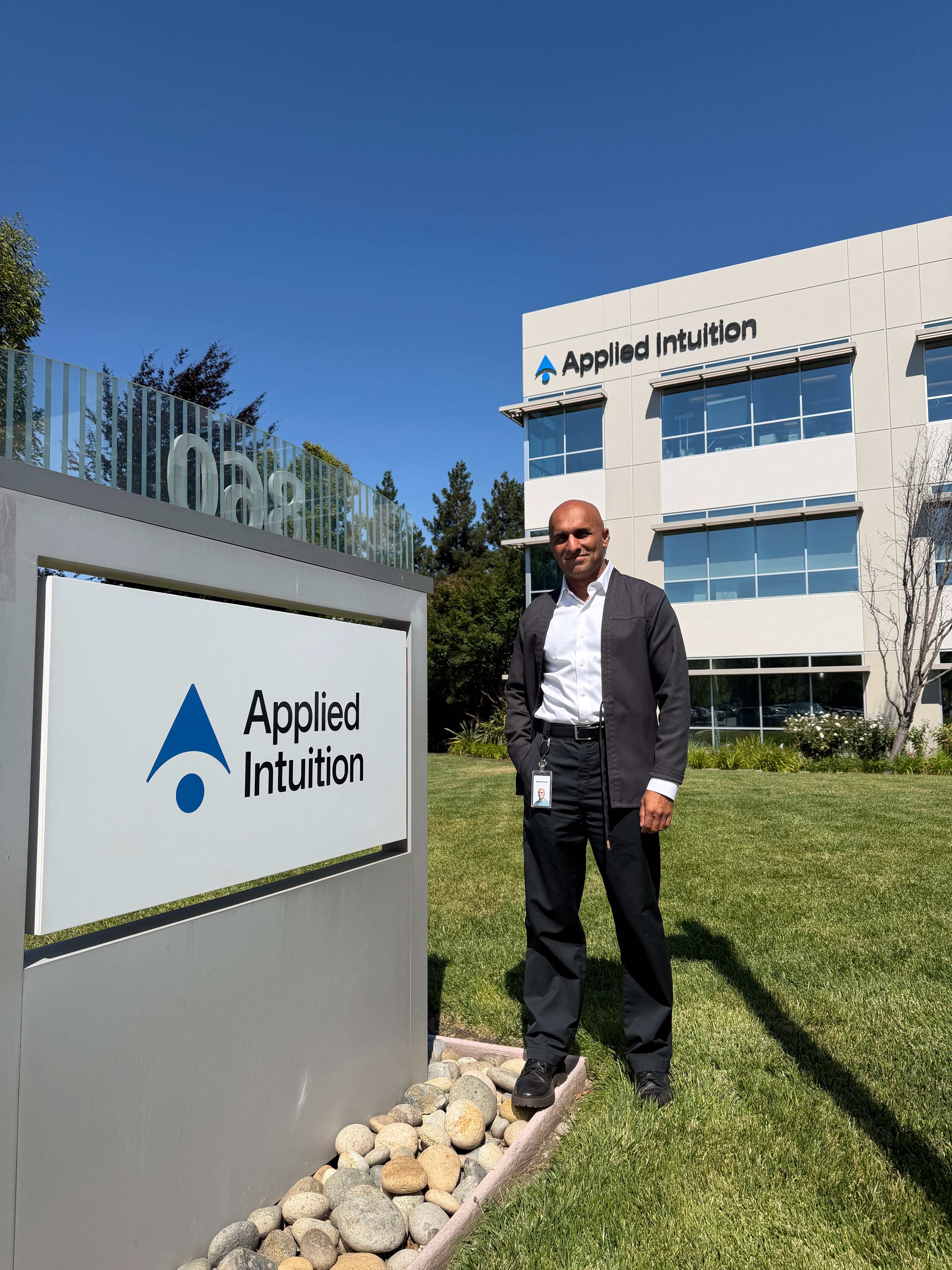
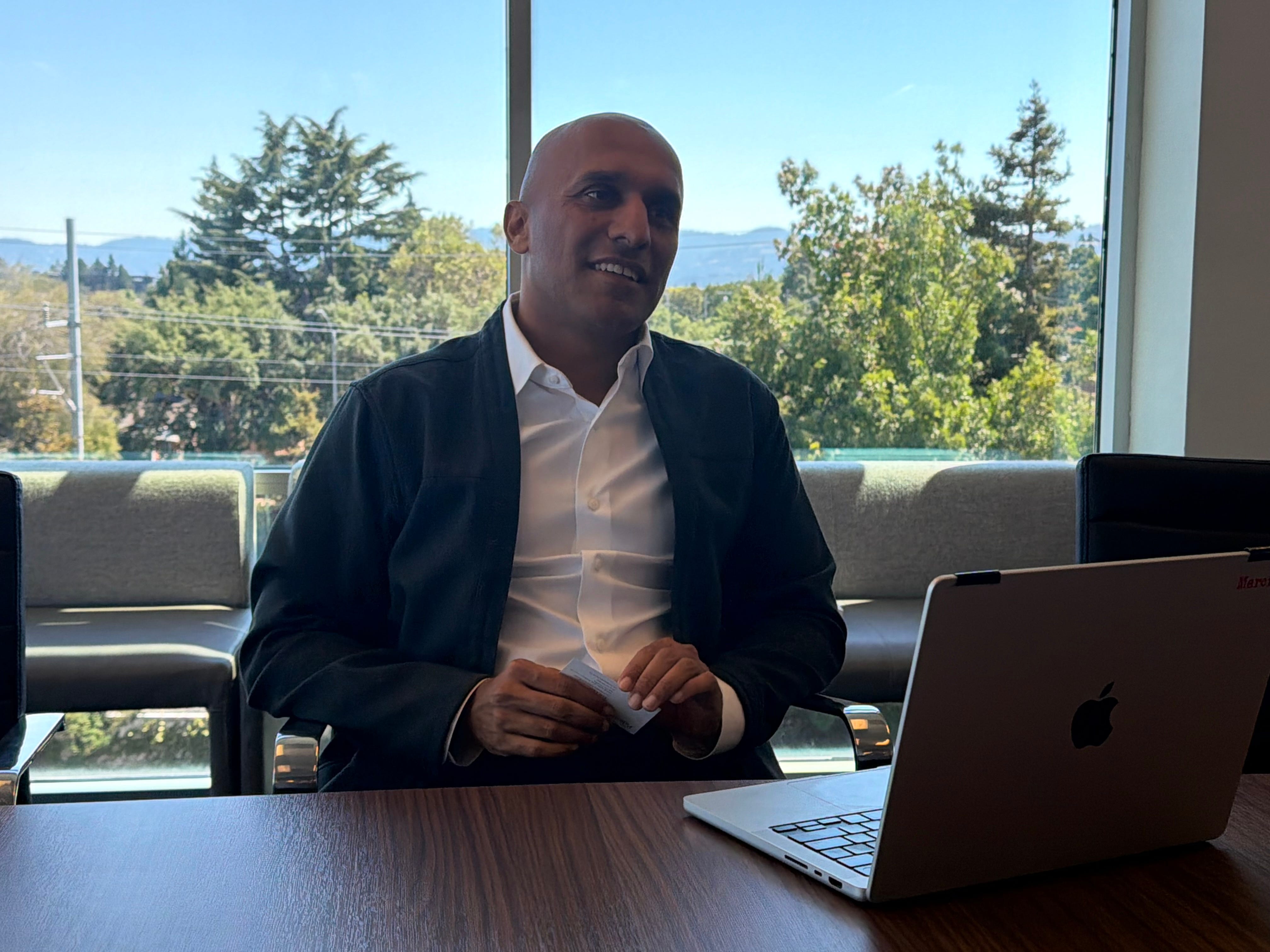
The résumé of co-founder and CEO Qasar Younis is unusual even by Silicon Valley standards. Born in 1982 on a farm in Punjab, Pakistan, he immigrated to the United States with his family in 1988. His parents were production workers in Detroit’s auto industry. He studied mechanical engineering at Kettering University, the engineering school founded by General Motors and formerly known as the General Motors Institute (GMI), working on a GM engine line while a student. After graduating, he worked as an automotive engineer at GM and then at Bosch. During his Bosch years, he was posted to Japan, where his assignments included airbag development for the Hyundai Santa Fe.
After earning an MBA at Harvard Business School, he moved to Silicon Valley and in 2011 founded TalkBin, a messaging startup for small businesses. Within months of entering the Y Combinator accelerator, he sold the company to Google, where he went on to lead business-facing products tied to Google Maps. He then returned to YC as a partner and, from 2015 to 2017, served as chief operating officer under Sam Altman, then YC’s president. In 2017, he left YC to found Applied Intuition with Peter Ludwig, a Google engineer who had led work on Google Maps and Android Automotive. Ludwig, who was born and raised in Detroit, comes from a family of automotive engineers spanning three generations.
A Valuation That Soared Through the “Autonomy Winter”
Capital markets have rewarded the company’s growth. Applied Intuition was valued at $6 billion in its Series E round in March 2024. In June 2025, it raised $600 million in a Series F round plus a secondary sale (tender offer) co-led by BlackRock-managed funds and Kleiner Perkins, at a valuation of $15 billion, roughly 20.5 trillion won. Its valuation more than doubled in a little over a year. Porsche joined the Series E as a strategic investor, and the Series F brought in new investors including the Qatar Investment Authority and Franklin Templeton. Total capital raised stands at about $1.2 billion. Forbes estimates the company’s 2025 revenue at roughly $800 million, double the prior year, with gross margins above 80 percent. The company says it has been profitable throughout its history. Marc Andreessen, an early investor and board member, has called Younis “the best AI CEO nobody knows,” and Forbes added him to its billionaires list this year.
What makes this growth interesting is that it happened while the autonomous driving industry was going through its “winter.” In 2022 and 2023, the sector suffered a severe correction. Argo AI, backed by Ford and Volkswagen, shut down. GM’s Cruise pulled out of the robotaxi business after an accident. Embark, an autonomous trucking company once valued at $5.2 billion when it went public, was acquired by Applied Intuition in 2023 for $71 million. While competitors fell, this company expanded its customers and its lines of business.
The past year shows the direction of that expansion. In February 2025, the company acquired EpiSci, a defense autonomy software firm, and in June it announced a collaboration with OpenAI to develop in-vehicle AI experiences. In August it unveiled a self-driving system for passenger cars, joining a field that includes Tesla, Waymo, and Huawei. This year the pace has quickened. In March it announced TRATON ONE OS, a vehicle operating system, with TRATON, the Volkswagen Group’s commercial-vehicle arm (Scania, MAN, International, and Volkswagen Truck & Bus). In the same month, together with Japan’s Isuzu, it put second-generation autonomous trucks onto a 450-kilometer commercial logistics route.
Its ties to Korea are growing as well. After announcing a collaboration with LG Innotek at CES 2026 in January, the company signed a formal strategic partnership in March to integrate LG Innotek’s camera, lidar, and radar sensors with Applied Intuition’s self-driving system.
The most interesting thing about the company’s growth is not what it built but the order in which it built it. Applied Intuition did not set out to build a fully self-driving car from day one. It dug in first on simulation and development tools, which automakers cannot do without but which are costly and time-consuming for each of them to build alone. Only after earning their trust did it expand into the vehicle operating system and autonomy AI.
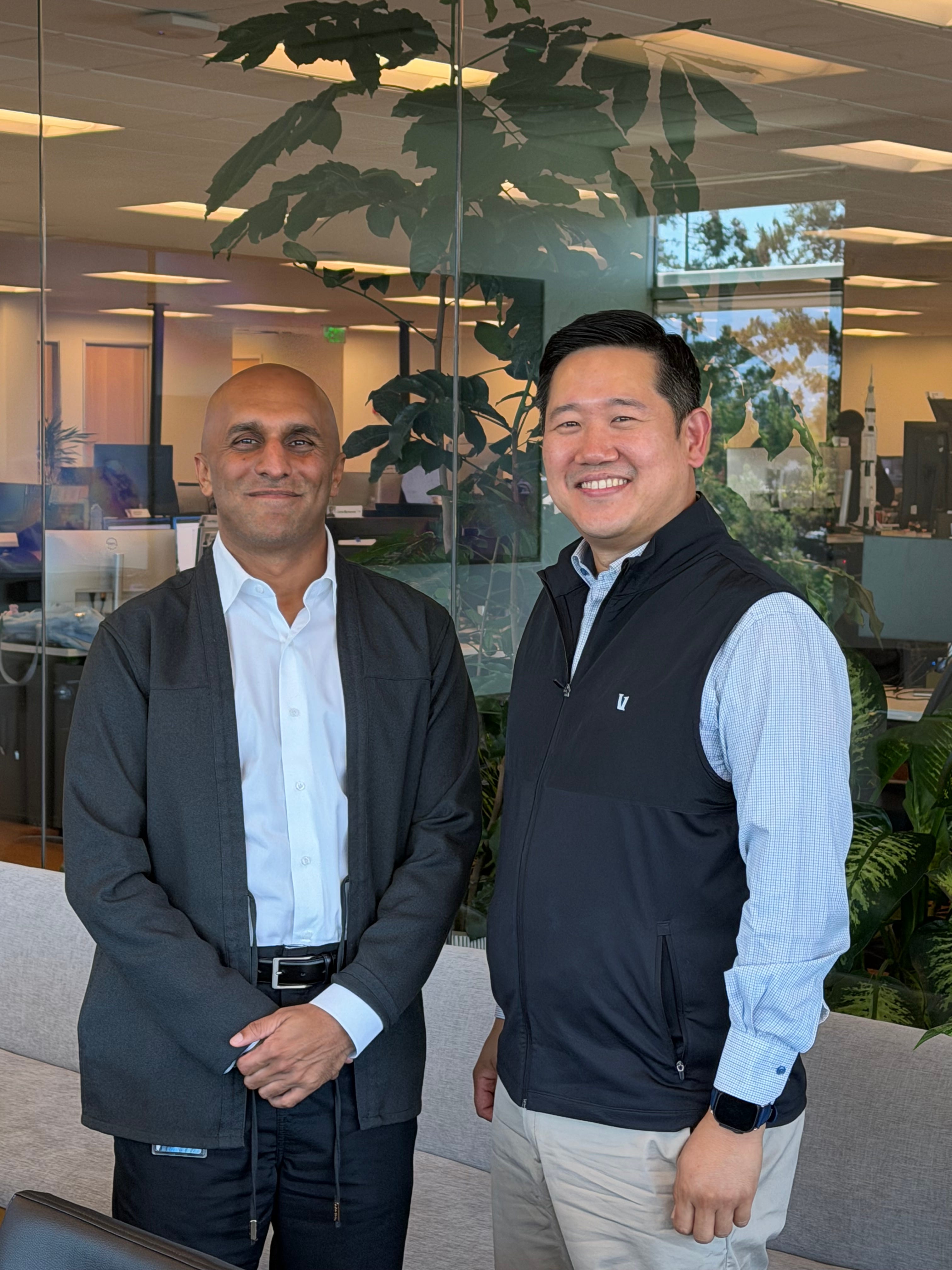
I met Younis this June at Applied Intuition’s headquarters in Sunnyvale. I wanted to hear how a simulation company became a physical AI company, how it came through the autonomy winter, how it won the trust of conservative automakers, and how it sees the Korean market. True to his roots as an automotive engineer, Younis reached for an auto-industry analogy in nearly every answer, and he drew on semiconductors, the internet, and even messaging apps to explain where physical AI stands today.
“If It Takes a Decade, What Do We Build in the Meantime?”
― You started as an automotive engineer, built a company acquired by Google, and served as COO of Y Combinator. Was there a specific moment when you decided that autonomy software would be your life’s work?
“For autonomy software specifically, that’s difficult to say. But I’ll answer the broader question. I went to the General Motors Institute, so I was maybe 16 or 17 years old when I thought, ‘I’m going to be in this business.’ So that’s the vast majority of my life at this point. In terms of autonomy specifically, the first time I heard about autonomy in a very realistic and significant way was at Google, because Google started the self-driving project at the time. But the question of when you are going to actually build an autonomy system is slightly different from when you are going to be in automotive.
That was probably around when the company was starting. We knew we wanted to get software on vehicles, but the whole point was, how do you do that? OEMs themselves mostly don’t trust small companies. Because of the procurement process and the safety-critical nature of their business, it’s very hard to get software on vehicles. It can take maybe a decade. And so we said, okay, well, it will take a decade. What are the other businesses we can build as we are building trust?
And relevantly, at Google we saw self-driving, and at YC we ourselves saw self-driving, because we funded companies like Scale, which was doing labeling, or Cruise, which was doing robotaxi, but there were also YC companies like May Mobility and Embark doing shuttles and trucks. So I saw autonomy a bunch of times before we actually got into it directly.”
― Many people still remember Applied Intuition as a simulation and testing company for autonomous vehicles. Today you describe it as building physical AI infrastructure for all moving machines. What does physical AI mean to you, how is it different from the AI most people picture, and how should we define Applied Intuition now?
“All companies are actually changing what they’re doing all the time. They’re always expanding or adjusting. If you take what Nvidia was in 1994 and what it is today, it’s vastly different. They’re not a video game graphics card company anymore. But that stuff that Nvidia did 30 years ago is still relevant. There’s no way Nvidia exists today without it. And Nvidia has three times our history and is a much bigger company. We’re kind of similar, in the sense that simulation and tooling more broadly is still a core part of the company. From the beginning of the company, everyone works on the models, or the functions, as they call them in automotive, but we always believed the tools are actually just as important: the other half of the same coin.
Physical AI, just to answer your question directly, is taking AI and putting it into the real world, into physical machines. Typically, the AI that most consumers think about is text-based language models, chat. But intelligence in machines, we think, is going to be much, much bigger, and that’s what physical AI is: intelligence in machines. A lot of times people think physical AI is humanoids, or something around robotics in manufacturing. Those are part of physical AI, but physical AI is actually a much broader topic.
We are truly a quintessential physical AI company. The way you make one of these systems has three parts. First, you have to train the system. You do that in simulation. Then you have to test the system, which you do in simulation and in the real world. And you have to deploy the system in the real world. We do all three of those things: training, testing, and deploying into the real world.
People still think about the company from a tooling perspective because it’s still a big part of our business. Many of the physical AI companies out there are actually using our tools. The other way to think about it is we’re the intelligence company for the real world. If you fast-forward another 20 years, to where Nvidia is today, I think we’ll be known as the intelligence company for the real world, and we’ll still have a tooling business from 30 years earlier.”
“The Bottleneck Is Not the Model. It’s Deployment.”
― You have said the real bottleneck in AI today is no longer model intelligence but deploying that intelligence onto constrained hardware. Why do you see it that way?
“I absolutely believe this is true. I’m talking first about the large language models, then I’ll talk about physical AI specifically. If OpenAI, Anthropic, and Gemini just stopped improving their models, you’d still get a lot of value out of the current models. The real problem in language models today is: Can they see your screen? Are they interacting with Slack? Can they safely secure your bank account and make transactions on your behalf? It’s all the infrastructure and the guardrails.
Lucky for us, that’s where we started. We are a testing company, and we’re testing physical AI, which is a safety-critical system. The bottleneck on the physical AI side ends up being very similar to the language model side: how do you deploy these models safely and across lots and lots of machines? We’ve deployed our intelligence and operating system on dozens and dozens of platforms, over 50 platforms now that use our AI and our software. So we’ve gotten very good at understanding how you get this stuff onto real machines. And it’s hard. There’s no simple way to do that. You can’t vibe code that into existence. The hard stuff is typically also your moat. The easy stuff, most people can easily copy. So I think the integration and the deployment are actually the constraint.”
● Vibe coding: A style of development in which a person describes what they want in plain language and lets an AI generate the code on the spot. The term took off in 2025. Younis uses it to say that safety-critical software for machines cannot be built that way.
There is a reason Younis keeps returning to deployment. Generative AI runs the same model on servers in a data center. Physical AI does not have that luxury: cars, trucks, drones, and construction equipment each carry different processors, sensors, communication links, and control systems. A vehicle has to keep working when its internet connection drops, and a delay of tens of milliseconds can end in an accident. That is why a model with a high benchmark score does not automatically become a deployable product.
“Autonomy Is Like the Computer Before the Internet”
― Physical AI is suddenly drawing enormous attention. Yet you have also said that most of autonomy’s impact still lies ahead. Why is the moment arriving now? Where is autonomy today compared with where it will be in ten years?
“You’re from Rochester Hills, in Michigan. If you go to downtown Rochester Hills and ask everybody walking by, they would have a different understanding of autonomy than people in Ann Arbor, whose understanding is different again from that of people standing on the street in downtown Sunnyvale, on Murphy Avenue. Even though Detroit is such a car-centric culture, the understanding of self-driving is vastly different. If you go somewhere like Tennessee, or a small town in Uzbekistan, there’s a huge, huge difference. There’s this great definition where technology makes it to everybody; it just makes it in an uneven way. You can almost think about the understanding of self-driving like transmitting a virus or a cold. It takes time to get from one person to the next.
The epicenter of this understanding is right around where we’re at. The South Bay, Silicon Valley, and San Francisco are the most sophisticated, for two reasons. One, this is where almost all the major companies are. Tesla and Waymo are within 10 minutes of here. But also, the people who work at Nvidia and Databricks and Anthropic actually understand a little bit of autonomy. Maybe they’re not working on it, but they already see that it’s a real thing, and they’re not nervous about it. Once you go to other cities, L.A. or Michigan or Rochester, the general view is that it exists, but that it’s still far away. I disagree with that. I think it exists, and it is closer than people think. People in Seoul, in Tokyo, in Singapore are going to see autonomy in the next few years, purely from the deployments of companies that have already figured it out, ourselves included.
“Figured out” is also kind of a tricky term. Is the software on your phone figured out? It generally does a lot of things, but iOS still does updates. You always have to think about any of these AI systems, or frankly any software, as living systems. You can make a chair and put it in a room, come back 50 years later, and the chair’s still there and it still works. Maybe it creaks, maybe it’s dusty, but it works. Software is not like that. If you leave software for 50 years, it’s not going to work. AI is similar. You constantly need to make it better and better and better.
Ten years from now, every major city on the planet will have this software available. Every major city will have robotaxi service, and cars you can buy that have this available. But that’s not the only part of the autonomy story. The rest of the story is places like the battlefield, mines, farms, ports, and airports, not only seaports but airports. All of those will have autonomy in them.
We’re old enough to remember that software wasn’t everywhere before. Phones didn’t have software. Software used to be contained in the computer that sat in your office. You had to sit down and turn it on, and it wasn’t even connected to the internet. Autonomy is like that right now. It’s the not-connected-to-the-internet version of computers. Still early.”
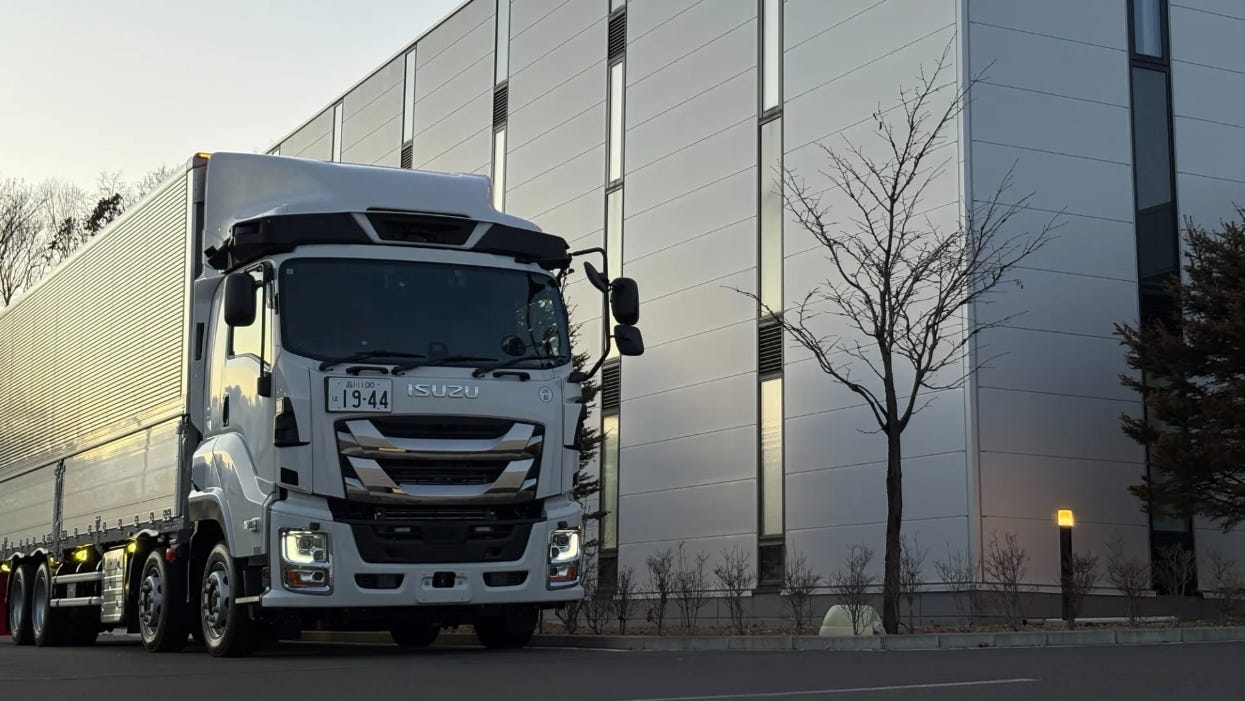
In Japan, that change has already begun. Since 2025, Applied Intuition and Isuzu have been running autonomous trucks with safety operators on board on public roads, including the Shin-Tomei Expressway. Since this spring, their second-generation autonomous trucks have been hauling real freight every day on a 450-kilometer commercial logistics route linking Tochigi and Aichi prefectures. Japan faces what is known as the “2024 problem,” with the number of truck drivers projected to fall 36 percent by 2030. Isuzu aims to launch a Level 4 autonomous truck by fiscal 2028.
● Level 4 autonomy: A level at which no human intervention is required within a defined set of conditions, known as the operational design domain (ODD). Unlike Level 2 and Level 3, where a driver must remain ready to take over, the driver’s seat can be left empty.
Horizontal Companies Get Stronger in a Downturn
― The autonomous vehicle industry went through a major correction. Well-known companies struggled, shut down, or were acquired. Applied Intuition, however, became more valuable during that period. Why?
“We’re a technology provider. We’re a horizontal company, not a vertical company. A lot of the autonomy companies are vertical companies. When any industry gets pricing pressure, horizontal companies actually do well, because they offer a cost-friendly solution. If you’re running out of money, or you’re having a hard time getting money, or the products are moving to production, which is another way of saying it now needs to be dollar-sensitive, then you start looking at parts of the technology you can buy.
Here’s a simple question: Why doesn’t every company make its own chips? Making a chip is not a secret. It’s possible to make chips. Hundreds and hundreds of companies, if not thousands, make chips globally. Autonomy? Not many companies make autonomy. So sometimes people think that because not many companies make it, that must be the reason people don’t do it. No. The reason horizontal companies exist is not because of the difficulty of the technology. It’s because of dollars and cents. As the industry moves toward production and goes through pricing pressure, horizontal companies that are on the applied side, not the research side, do better. We were a function of that.
Also, when times are tough, it becomes more apparent which companies are disciplined. When they’re disciplined, they use their limited resources very well. We’re a disciplined company, and we use our resources very well.”
Put simply, if one automaker tried to build its own autonomy development tools, simulation systems, and AI models, it would shoulder an enormous fixed cost alone. Applied Intuition, which supplies the same foundational technology to many automakers, can spread that development cost across many customers. The further the industry moves from research to mass production, the more that economics matters.
“We’re Not Foreigners in This Business”
― The auto industry is known for slow decision-making. How did Applied Intuition keep startup speed while serving it?
“It’s not easy, for sure. Being a supplier is not easy, period. How did we stay fast? This may not be the best answer, but I think it’s true: we just have the best products. When buyers clearly see the best product in the market, they’re more excited to buy, and they move faster. That’s probably one of the main reasons. The other reason is that in the specific categories we’re in, which are tooling, operating systems, and autonomy, including in-cabin intelligence, the automakers recognize that consumers really care about those things. Consumers really care about autonomy and cabin experiences and the SDV platform, the AI vehicle platform. And we’re selling it. They call that product-market fit. I think we have very good product-market fit.”
― A large share of the world’s leading automakers now rely on Applied Intuition, even as you compete with everyone from long-established suppliers to AI startups. How does a startup earn the trust of such conservative customers, and what ultimately makes Applied Intuition different?
“It’s a really great product. But part of it, honestly, is that we understand the market. When automotive executives meet us, they’re not confused. Imagine if you were meeting an AI startup here and you had to say something like, ‘Do you know a company named Renault?’ If I didn’t know Renault, I should not have my job. I know the history of these companies. I’ve read books about these things. That’s also the way we’ve gotten trust: we come from the business. We’re not foreigners in the business, we’re very native in the business, and that has really helped. And it’s very different for a manager in a company to come from automotive than for the founder to come from automotive. A lot of companies will just hire people who have some experience, but that’s different from the founder having the experience.”
You Can’t Test Every Situation in the Real World
― Applied Intuition began with simulation, validating autonomous systems virtually before they ever reach the road. Why is that so important, and how do simulation and real-world driving data complement each other?
“If you’re coming from a hardware background or a safety systems background, and I came from both, you think physical testing is basically the only thing that can happen. If you come from a software background, which I did at Google, then you realize how much can be done through software-in-the-loop testing. If anything, we’ve really taught the industry that software testing can do a lot more than the industry thinks: using software to test autonomous systems, using software to test the integration of systems. The industry can do much more software testing than it does even today. Software testing is important because these are software systems. The autonomy system is not a hardware system. It has hardware components, but it’s not a hardware system.
With that being said, you still need real-world testing. In terms of real-world data versus synthetic data, which we also provide, as AI systems develop more and more, synthetic data will continue to play a very, very important role. You’re seeing this in language models. They’ve already consumed all the data that exists on the internet, so they have to create new data, and that’s where synthetic data can help. Or they can create ground-truth data by hiring people who create data. Our vision to get our intelligence on a billion machines will require synthetic data, because the machines are so diverse. You need both of them.”
The strength of simulation is that it can freely create situations that almost never happen in reality. It is practically impossible to reproduce, thousands of times on a real road, a night of heavy rain in which one sensor fails and a pedestrian suddenly steps into traffic at the same moment. In a virtual environment, weather conditions, sensor faults, and traffic situations can be combined to validate such “edge cases” over and over. This is why simply adding real-world miles is not enough to prove that an autonomous system is safe.
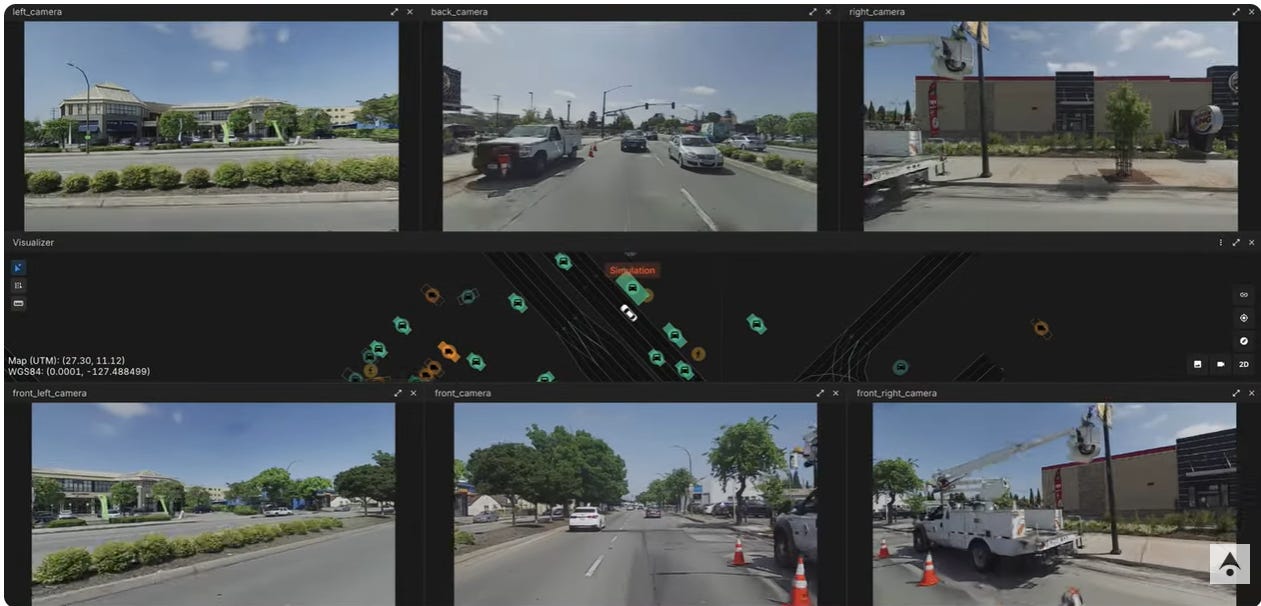
● Synthetic data: Training data generated artificially by simulation or AI rather than collected from real driving. It can produce large volumes of rare or dangerous scenarios that are hard to encounter in reality, and is used to train and validate autonomous systems.
Like CUDA, But Not the Same
― Is Applied Intuition’s platform aiming to become the common layer for physical AI development, the way Nvidia’s CUDA is for AI compute?
“Yes, in some ways, but CUDA is a very different analogy. CUDA is really the way Nvidia gets developers and customers to use Nvidia GPUs. We’re not trying to get them to use a GPU. But we do have a platform that works across all industries, and we’re the only company on the planet that is like that, using one platform across many, many industries: automotive, trucking, defense, construction, mining, agriculture, and so on. So it’s different from CUDA, but the idea that it’s a single platform across all industries is similar.
We have the software components, and there are also hardware components. I don’t know if you saw our LG Innotek announcement, as an example. We will find key partners in that sense, a sensing partner that can help us make that platform really cheap and available for everybody, and vice versa. We’re working with the best, and I think LG Innotek is one of the best.”
● CUDA: Nvidia’s GPU programming platform, launched in 2006. Because most AI developers build their software on CUDA, it creates a powerful lock-in effect that makes it hard to move away from Nvidia GPUs.
Chinese Automakers Have One Criterion: Speed
― Where is the line between what automakers should build in-house and what they should buy from a supplier like Applied Intuition?
“For every OEM, it’s different. If you look at the Chinese ecosystem as a guide, I think the Chinese OEMs are the smartest when it comes to this, because they prioritize everything based on one thing and one thing only: speed. If it’s faster to use somebody’s system, they’ll use somebody’s system. If it’s faster to build their own, they’ll build their own. They’re not dogmatic about this. Traditional OEMs can be very dogmatic, incorrectly. Their view is, oh, everything strategic has to be in-house. That’s true if you have endless time. If you have endless time and money, you should build everything. But if you don’t, partnering becomes really important.
My sense of where that line is: as long as the end consumer doesn’t realize or know what’s in-house and what’s from a supplier, it doesn’t really matter. Now, that’s very different from the OEM still needing to know the technology. Over the last 30 years, OEMs became such buyers of goods because it’s literally cheaper to buy gas springs and windshields and rubber from a supplier who is getting volume discounts, that they don’t know all the subcomponents well enough to make them completely themselves. As long as the OEM understands the technology, procuring is completely fine, because the consumer doesn’t know whether it’s theirs or not. The consumer cares about speed and about price, and the supplier can help reduce that price.
Take us, for example. We spend hundreds of millions on AI. No OEM is willing to spend that amount of money to train models just for their own vehicle, because it doesn’t make sense. You won’t get the return on it. But you can buy a model at a huge discount that’s automotive-specific and safety-critical. That’s where we play.”
Defense and Dual Use: “WhatsApp Didn’t Cost $20 Billion to Make”
Alongside automotive, the other market where Applied Intuition is expanding fastest is defense. Its defense business grew sharply after the acquisition of EpiSci in February 2025. In April of this year, it signed an agreement with HII, the largest military shipbuilder in the United States, to bring AI to next-generation naval platforms. At its core is Warship OS, an operating system that links the data and AI scattered across a ship into one system to support the autonomy of both manned and unmanned vessels.
― What led you to extend commercial autonomy technology into defense?
“We’ve been in defense for a long time, almost from the beginning of the company’s history. Most recently, we announced Warship OS, our AI operating system for naval platforms, where we’re integrating unmanned surface vessels. Why did we do this? For two reasons.
One is that we believe in the mission. We think it’s important for companies to support defense, because in America specifically, private industry is actually stronger than maybe even the public sector. The companies can really decide if they want to. In other countries, that’s not always the case. If you’re a company, you kind of have to do it. You don’t have a really good choice. Now, ironically, in other countries the citizens are more pro-defense. If you go to China, to Korea, to Japan, the citizens understand why defense is important. In the U.S., because you’re so far away from everybody, sometimes for citizens it seems like a very abstract thing. So that’s the first point. We think it’s an important mission.
The second thing is that we’re a dual-use company. It’s important to note that we’re taking commercial technology and putting it into defense, rather than creating bespoke, defense-only technology. The advantage of that for the defense sector is you get better products at a cheaper price. Imagine if you were making a defense text messaging product and you wanted end-to-end encryption. Maybe you spent $20 billion on it. The crazy thing is, WhatsApp is exactly that. It’s end-to-end encrypted, it’s a chat product, but WhatsApp didn’t cost that much money to make. There’s a big lesson to be learned there. The commercial side of the business has to be extremely cost-conscious and disciplined, because the dynamics of capitalism require it. So dual use is kind of nice: you take the best thing about commercial business, which is discipline and cost-effectiveness and stability, because so many people use it, and you put it in the context of defense. It works really well.”
● Dual-use technology: Technology that can serve both civilian and military purposes. A typical example is autonomy software developed for trucks that can also be applied to military vehicles or unmanned naval vessels.
“Every Dollar We Get, a Customer Has to Make First”
― You already have offices in Seoul and Tokyo, and Level 4 autonomous trucks are running in Japan. How do you view the Asian market, and Korea in particular?
“The Asian market is, for us, one of the most important markets, if not the most important. Japan and Korea are large industrial countries, and I don’t mean just from a development perspective. They actually have companies that do a lot of industrial work, and that’s really important. So we’re going to continue to grow our offices in Japan and Korea. This is directly correlated with our business, and we think we’re going to continue to get business there.
I myself have worked as an engineer in Japan, so I understand the region a little bit more. Korea obviously is a little different, but my first customer when I was at Bosch was Hyundai. So I’ve known the Korean automotive ecosystem for over 20 years. I worked on the Hyundai Santa Fe, around 2008, for the airbags. Hopefully there have never been any recalls. So I’ve known for a long time now how important the ecosystem is. Hyundai specifically, to be honest, is a really impressive company in the automotive sector. I’m not speaking of the heavy industries and other things; I don’t know them as well. But in cars and in trucks, it’s a company that came from nowhere and is now top five, top three in the world. It’s unbelievable: a little country, a little company, becoming dominant. It says a lot about how important they are in the OEM ecosystem.
If our customers are not successful, we’re not successful. Every dollar we get, a customer has to make first, and so we take that very seriously. Our customers like Hyundai have to work hard and win the market, and then we can eat. So it’s important for us to make sure they’re winning the market. The reality is that the real competitor for Hyundai and a lot of companies is the Chinese ecosystem, which is an area we don’t play in. So we also have mutual competition, in a way: when we do well and Hyundai does well, we’re advancing the whole ecosystem. It’s a hugely important office for us, country for us, and customer base for us.”
― At CES 2026 you announced a strategic partnership with LG Innotek. What do you hope to achieve with Korean companies, and how do you see potential collaboration with Korea’s automotive, battery, robotics, and defense players?
“We’re very proud of the LG Innotek relationship. What do we hope to achieve? We want to bring intelligence into machines, and we have models and tools and operating systems that can help each of these sectors make the best products in the business for them. The best partnerships are ones where each party brings the best in its respective area, and together they create the best total product. I hope we continue expanding our business in Korea with more companies and more use cases.
We think these are still the early days. It’s a very industrial economy, and there still generally isn’t much intelligence in those systems, not only in Korea but in the U.S. and Europe, everywhere. I think we can help bring it. We have an office in Seoul, and we do engineering there as well. Our goal is to grow the office, and therefore grow the subsidiary, the Korean company, and ultimately make our customers successful. If customers are successful, we will be successful.”
The LG Innotek partnership is the first case of the “sensing partner” strategy Younis describes. LG Innotek’s camera, lidar, and radar sensors are fitted to the autonomous test vehicles that Applied Intuition operates in the United States, Europe, and Japan to gather performance data on real roads. Digital models of the sensors are also placed in the simulation environment so automakers can check the compatibility of sensors and software during development. LG Innotek in turn plans to operate its own autonomous test vehicles in Korea using Applied Intuition’s platform. It is a structure in which a component maker teams up with a software company to approach automakers with an integrated solution.
“Just as the Internet Did, AI Will Change Everything”
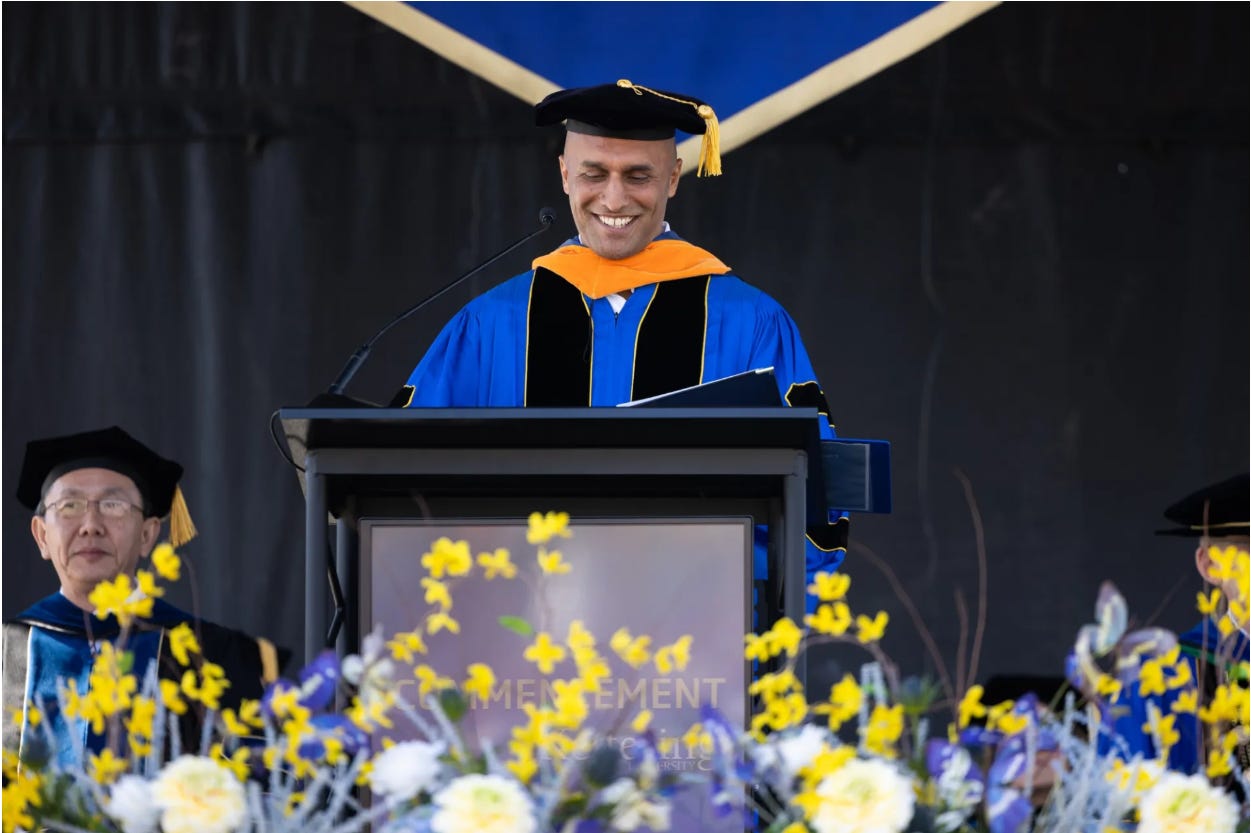
― You are delivering the 2026 commencement address at your alma mater, Kettering University. What message do you want to share with a young generation entering an economy being rebuilt around physical AI and autonomous systems? (At the time of the interview, Younis was days away from the speech.)
“As I say in the speech, I think new graduates should understand that there have been other technology waves. This is not the first technology wave. When I was going to Kettering, the big wave was the internet, and at the time people would say, ‘Every company is going to be impacted by the internet.’ People didn’t believe this. But today, your restaurant is impacted by the internet because of DoorDash and Uber. Everything is impacted by the internet. I think AI is similar. If I’m a student, it’s important to take responsibility both for learning it yourself and for guiding society in the right way to use this technology correctly.
The internet can also be used in a very wrong way. But generally speaking, if we just turned off the internet for the whole world today, you’d have a lot of unhappy people. Just simple things like messaging. We take for granted that you can message anybody on the planet for free within half a second. That’s an unbelievable reality, for free. When we immigrated from Pakistan, the only way you talked to Pakistan was by writing physical letters. It took 30 days. We talk about the bad things of technology sometimes, which is important. I don’t think you should ignore it. But you also have to be balanced and talk about the good things. How positive and how negative something is depends on the young generation. They can make it, and require it, to be more positive, or they can ignore it and just hope that it ends up being positive. I recommend the former, not the latter.”
Kettering University awarded Younis an honorary Doctor of Engineering degree at its commencement on June 20. When he applied, the school was still called the General Motors Institute. GM Chair Mary Barra is also an alumna. A career that began on a Michigan engine line and led to founding a physical AI company in Silicon Valley is, in a sense, a compressed version of the cooperative education model the school stands for.
“A Billion Machines, and Lives Saved”
― Looking ahead five to ten years, how do you hope Applied Intuition will have changed the world?
“I hope that we’re on a billion machines, that our intelligence is on a billion machines, and if that’s the case, we’ll have saved the lives of actual human beings. We’ll have reduced injury and suffering. Those are all very positive things. Hopefully we’re a much bigger company, so we can have a bigger impact. And I hope we’re a company that Silicon Valley can look toward as an example of a good AI company. Big hopes, big dreams.”
Since the interview, Applied Intuition has moved in exactly the direction Younis described. In July it launched Dana, an agentic platform that lets users direct data collection, simulation, and validation for autonomous machines in natural language. Isuzu and the Japanese construction-equipment maker Komatsu were the first to use it. Younis explained that the only way to get intelligence onto a billion machines is to make the technology available to everyone. On August 31 the company announced a national-scale autonomy plan with HUMAIN, the AI company owned by Saudi Arabia’s Public Investment Fund, to deploy driverless trucks across Saudi Arabia by 2030 and expand into robotaxis, ports, and mines. It will also open an office in Riyadh. The mines, ports, and roads he named in the interview as autonomy’s next stage have arrived together in a single agreement.
Whether Younis’s “billion machines” becomes reality remains to be seen. One thing, though, is clear. The AI race is no longer being run only on computer screens. As AI begins to drive cars, move trucks, work in mines, and steer ships and drones, the ability to carry that intelligence into the real world is becoming as important as the ability to build the model. As Younis put it, the harder the problem, the higher the moat for the company that solves it. AI’s next great battlefield may not be the model itself, but deployment.

By Eric Choi
Eric Choi is CEO of Palo Alto Capital, a Silicon Valley-based private equity firm he founded after earning his MBA from the University of Michigan and working at Samsung SDI America and SK Global Development Advisors. Earlier in his career, he worked as a top-ranked equity research analyst in Asia. He is also the author of Auto Empire and several books on U.S. stocks, energy, and post-pandemic industry trends.